Utah property tax appeal for a home with deferred maintenance — the assessor never saw the roof
The county's model prices your house as an average example of its age. The last detailed look at it was up to five years ago, from the street. The $30,000 repair list is your argument — but the bid isn't the number, and the sales have to make the case for you.
Most owners of a tired house assume the county already knows. The roof is thirty years old and the shingles are curling. The furnace is the one that came with the house. The sewer lateral backs up every spring. Surely somebody at the assessor's office factored that in.
Nobody did. The county has never been inside. Under Utah Code §59-2-303.1 the assessor updates values every year from market data, but is only required to take a detailed look at the property itself once every five years — and that look is a drive-by. The condition on your parcel record is a guess about the outside of the house on one afternoon, possibly during the last administration. Between looks, the model prices the house as an average example of its age and its street, and the number on the July notice is that average multiplied by your square footage.
So the appeal is the only mechanism that ever tells the county about the roof. That's the opportunity. The trap is thinking the repair list is the argument. It isn't. A $30,000 bid is the floor of the case, not the number — what a hearing officer can act on is closed sales of houses in the same shape, and the bid's job is to explain why those are the right sales. What follows is how the county sees the house, why cost to cure and market discount are different numbers, how to pick comparables by condition, how to photograph a house so the photos count, and where a signed report earns its fee. One calendar note: the filing deadline under §59-2-1004(3)(a) is the later of September 15 or 45 days after the notice was mailed. If you filed, this is the hearing prep. If you didn't, it's next July's plan — and the photographs start in December.
Five years, from the curb — how the county sees your house
The statute has two clocks. §59-2-303.1(2)(a) says the assessor "shall annually update property values … based on a systematic review of current market data." That's the model — sales in, rates out, every year. §59-2-303.1(3)(a) says the assessor "shall complete a detailed review of property characteristics for each property at least once every five years." That's the look. And in a county with 350,000 residential parcels, the look is an appraiser-technician in a vehicle checking the exterior against the record card: still a rambler, still a two-car garage, still standing.
What the card carries is a condition or effective-age field, and for most houses it reads the equivalent of "average." Average means typical for a house of that year in that neighborhood — a 1978 split-level in Kearns is assumed to have a 1978 split-level's finishes and a roof that's been replaced once. The model does not know which houses got the second roof and which didn't. It doesn't know the furnace was condemned by the gas company. It doesn't know the basement has been wet since 2021.
The mechanism is sample bias, and it runs against the tired house specifically. The sales the model learns from are disproportionately the updated ones — those are the houses that get listed, photographed, and sold at asking. The house that hasn't been touched since the Carter administration sells less often, and when it does, the model reads it as one low data point in a neighborhood of higher ones. The rate drifts toward the renovated end of the street. Every unrenovated house on it gets carried along.
The county valued the street. Nobody valued the roof.
Cost to cure is not the discount
The first instinct is arithmetic: three bids, add them up, subtract from the notice. Roof $20,000, furnace and air $12,000, sewer lateral $9,000 — the house is $41,000 over-assessed. It's clean, it's documented, and it's the wrong number in both directions.
The standard is §59-2-102: what a willing buyer pays a willing seller, both with reasonable knowledge of the relevant facts. A buyer with reasonable knowledge of a $41,000 repair list does not offer $41,000 less. For systems and structure — the items that decide whether the house can be lived in and financed — the buyer offers more than that off. The bids carry no contractor margin for the buyer's trouble, no allowance for what's behind the drywall once the plumber opens it, no price on three weeks without heat. And a roof that fails a lender's condition review knocks every financed buyer out of the pool. What's left is cash and renovation-loan money, and cash prices the risk. In practice the $41,000 list produces a $50,000 to $65,000 gap against the updated house next door.
For cosmetics the arithmetic runs the other way. Paint, carpet, a laminate kitchen, almond appliances — a buyer discounts those, but lightly, and on a 1978 house the county's rate already assumes them. "Dated" is not deferred maintenance. It's the baseline. An owner who walks into the hearing with a $35,000 kitchen bid and a working furnace has brought a remodeling wish list, and a hearing officer will say so. The distinction the industry uses is the difference between a C4 — "some minor deferred maintenance … requires only minimal repairs" — and a C5 — "obvious deferred maintenance and … in need of some significant repairs," in Fannie Mae's condition-rating definitions. Those ratings are meant to be absolute, not graded on the neighborhood curve. A well-kept 1978 house in Salt Lake or Weber County is a C4. The appeal is for the C5 — and the C6, where "deficiencies or defects … affect the safety, soundness, or structural integrity."
The bid tells you the house has a problem. The sales tell you what it costs.
The comparable is the other tired house
Salt Lake County's evidence page asks for three to five closed sales from within one year prior to January 1, in MLS Residential Full Report format. It does not mention photographs, condition, or contractor bids at all. The county's evidence is sales, because value is sales. Condition is how you choose them.
There are two ways to build the case. The first is to pull the updated sales the model used and adjust each one down for condition — and every one of those adjustments is a number a hearing officer can dispute, because you're asking them to accept your estimate of what a roof is worth on someone else's house. The second is to find sales of houses in your condition tier and let the market do the adjusting. That's the one. The order of preference:
- Same neighborhood, same era, same condition tier. A 1970s house within a mile that sold as-is with a known repair list. If two or three exist, they're most of the case.
- Same product and era, wider radius, same condition. A tired split-level in Taylorsville compares to a tired split-level in Kearns better than either compares to the renovated one across the street.
- Updated sales, adjusted down. Only when the first two tiers are empty, and only with a paired-sales basis for the adjustment — a renovated and an unrenovated sale of the same model, and the gap between them.
Finding the first tier is a reading exercise. The MLS remarks and the photos are where condition lives, and the tells are consistent: "sold as-is," "seller will make no repairs," "investor special," "bring your contractor," "cash or conventional only," "needs TLC," a listing with eleven photos and none of the basement. Financing terms on the closed sale are a tell too — a cash sale in a neighborhood that's 80% financed usually means the house couldn't pass a lender's look. Pull those reports whole.
A worked example. A 1978 split-level in Kearns, assessed at $520,000 for 2026. The neighborhood rate came from eight 2025 sales, six of them updated, closing between $505,000 and $540,000. Two sold as-is — one at $462,000 with a "roof and HVAC needed" remark, one at $471,000 cash after a failed financed contract. A third as-is sale two miles into Taylorsville closed at $458,000. The house with the curling shingles, the original furnace, and the annual sewer backup belongs with the three at $458,000 to $471,000, not the six at $520,000. That's a $50,000 to $60,000 gap, and it's the market's gap, not the owner's arithmetic.
Three tired houses that sold prove more than thirty bids that didn't.
Photographs are evidence — if they're taken like evidence
Every owner brings photographs. Most of them are useless: a phone shot of a stain with no context, taken in August, from too close, with no way to tell which house it's in. The photographs that count are the ones that establish location, condition, and date in one sequence, and the discipline is the same one used in the field on a tax appeal appraisal:
- Wide, then detail. The front of the house with the address visible. Then the roof from the ground, then the roof from a ladder or a drone — curled tabs, exposed felt, the patch from 2019. Then the attic side of the same spot, with the daylight coming through.
- The data plates. The furnace and water heater serial plates date the equipment; the electrical panel label identifies it. A Federal Pacific or Zinsco panel is a photograph that ends an argument about whether the house is "average."
- Water, wherever it is. Ceiling staining under the roof, efflorescence and staining on the foundation walls, the sump, the floor drain. A sewer-scope video is worth more than any still.
- Scale and date. A tape measure across a foundation crack. Timestamps preserved in the file metadata, not stripped by a messaging app — email the originals to yourself and leave them alone.
- The paper. Two or three itemized bids on contractor letterhead, dated as close to January 1 as possible. An inspection report if there is one — a failed buyer's inspection from a fallen-through sale is the best document in the file.
Two rules on timing. The value is as of January 1 under §59-2-103, so the condition that matters is the condition on that date — the roof that failed in April is next year's appeal, and the furnace replaced in March doesn't erase the fact that the house needed one on New Year's Day. Document in December and January, not in September when the notice arrives. And under §59-2-1004(7)(a) the evidence has to reach the county at least five days before the hearing. Build the file before you file the appeal.
One caution the county's page won't give you. Photographs cut both ways. A wide shot of the failed furnace that also shows the 2023 kitchen behind it has just updated the county's record card, and the record card doesn't reset. Photograph the defects. Don't photograph the remodel.
A stain is a photo. A dated stain under a dated roof with a dated bid is evidence.
What it's worth — and the two ways to lose it
Run the rule of thumb from what a Utah BOE appeal actually saves: on a primary residence at a combined rate near 1%, a $1,000 reduction in market value is worth roughly $5 to $7 a year after the 45% residential exemption. The Kearns example — $55,000 high — is $275 to $385 a year, and it compounds. For a C6 house with a foundation problem, the gap can be $100,000 or more against a street of renovated neighbors, which is real money every year the record says "average."
The first way to lose it is to argue the wrong variable. The county's record carries a quality grade and a condition field, and they aren't the same thing. Quality is construction. Condition is upkeep. An owner who tells the hearing officer the house is "low quality" because the roof leaks has argued a field the roof has nothing to do with, and the officer will correctly leave the quality grade alone. Argue condition. Use the word.
The second is to argue value before the two lines above it. Taxable value divided by market value on the notice: 0.55 means the residential exemption is on, 1.00 means it's off, and on a house that changed hands or was briefly rented, it's off more often than you'd think — the residential exemption guide covers the fix, and it's worth more than most condition appeals. Then the square footage: older houses carry the worst records in the county, with enclosed porches, converted garages, and unfinished basement counted as finished, and a house measurement to ANSI Z765 is the cheaper correction when the area is wrong. A condition argument on a house that's also carrying 200 square feet it doesn't have is leaving the easier win on the table.
Condition is the third argument. It's the one that needs the most evidence, so make the first two first.
Where an appraisal fits — and where it doesn't
If there are two or three as-is sales in the neighborhood in the window, the defects are visible in photographs, and the exemption line is right, the MLS reports and the file are the appeal. No report needed, and anyone who tells you otherwise is selling one.
A signed tax appeal appraisal earns the fee in the cases the neighborhood can't argue on its own:
- No as-is sales in the window. When the only comparables are updated, the adjustment has to be derived — paired sales, cost-versus-contribution — and a hearing officer weighs that from someone who does it weekly, not from an owner's spreadsheet.
- The interior is the case. The assessor never went inside. An appraiser does — the inspection is the differentiator, and a condition rating assigned by a licensed appraiser who walked the house is a different kind of evidence than a stack of photographs.
- Structural or C6 issues. Foundation movement, a failed retaining wall, structural water damage — the market's reaction is large and nonlinear, and the number needs a method behind it.
- The county brings its own comparables. Two comp sets in front of a hearing officer; one of them should be signed.
- The house is in a thin market. A tired cabin in Summit County or a 1960s ranch in a rural corner of Weber County may have no condition-matched sale within ten miles, and the report is the only way to get a defensible number in front of the board.
If you want a read on which of those describes your house before spending anything, send the address, the notice figures, and the repair list. Sometimes the honest answer is "pull the two as-is sales on your street and skip the report."
The appraisal puts a method behind the number. The sales put a market behind it. The appeal needs one of the two — and the county has neither for your house.
Frequently asked
Related reading
Start with the mailing that triggers all of this — reading your Utah property valuation notice decodes the July notice line by line — then work backward from the September 15 checklist. The residential exemption guide covers the 0.55 division that comes before any condition argument, and ANSI Z765 explained covers the square-footage line that comes second. If the tired house is attached, the condo and townhome appeal has its own comparable rule; if you bought it in the last year, the purchase-price appeal is the shorter road. What a BOE appeal actually saves has the arithmetic, and what a Salt Lake County BOE hearing looks like covers the room. Service pages: tax appeal appraisal, house measurement.
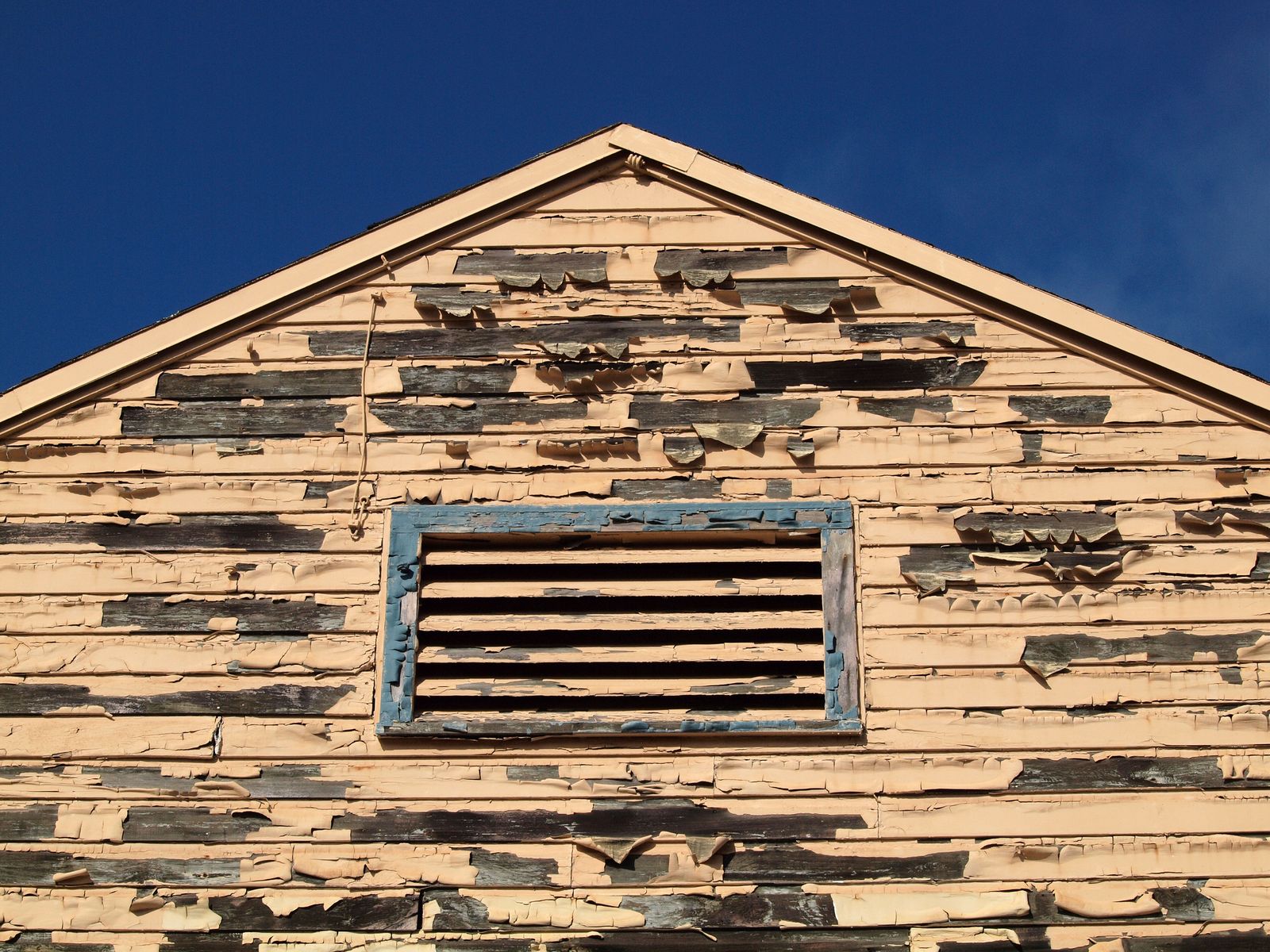
The county has a rate for your street and a five-year-old glance at your gable. You have the roof, the bids, the photographs, and three sales that prove what a house like yours actually brings. Bring them.
Miner Appraisals is an independent, non-AMC residential appraisal practice in Utah — owner-operated by Dan Miner, Utah Certified Residential Appraiser (Lic. 10948175-CR00). Direct engagement only, signed reports, USPAP-compliant. Property tax appeal, house measurement, pre-purchase, and the rest of the full service catalog. Practicing since 2017.