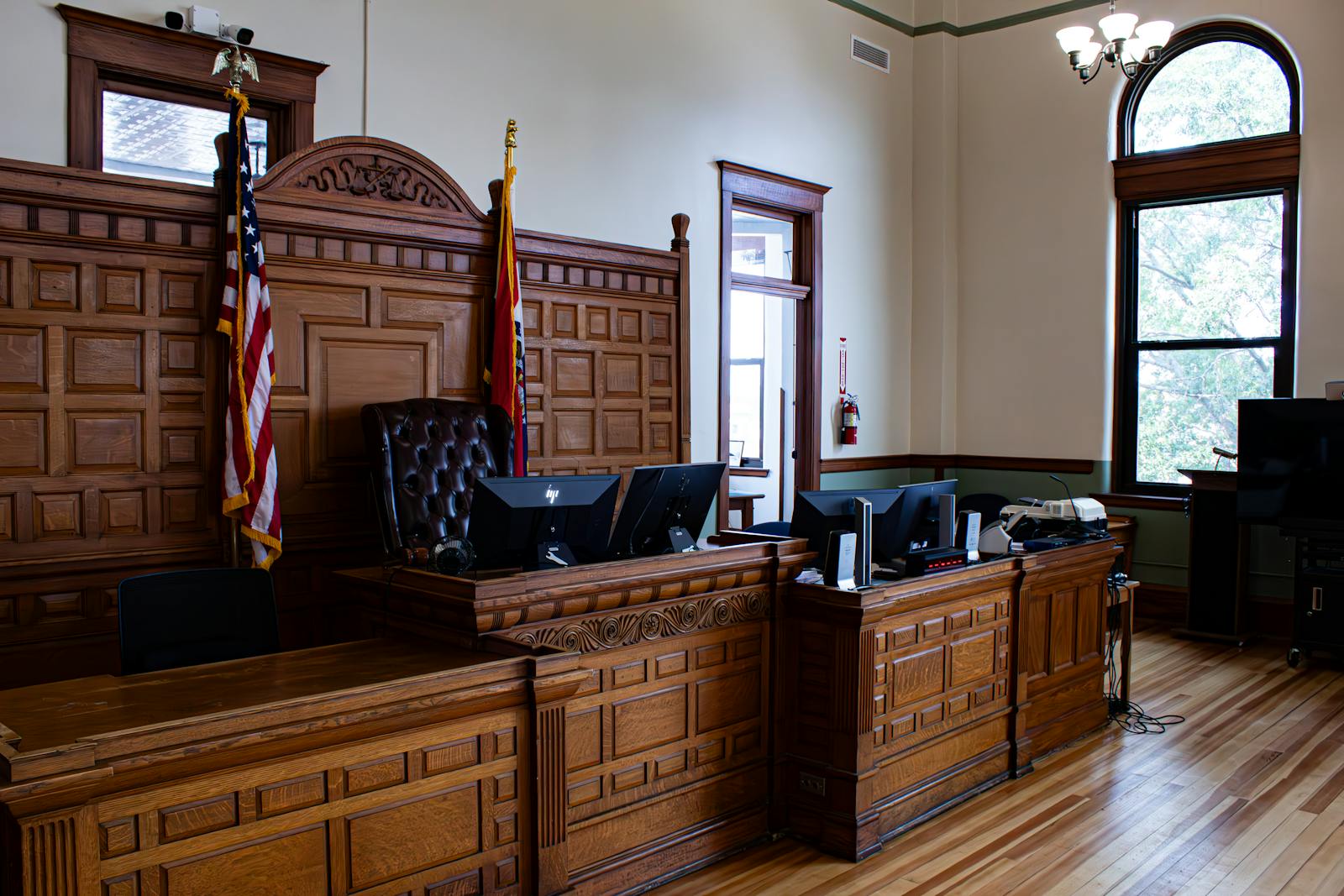
What a Salt Lake County BOE appeal hearing actually looks like
People picture a courtroom — a judge, a podium, opposing counsel. A Salt Lake County property tax appeal is nothing like that. Here's the whole thing, start to finish, including what the room actually feels like and why most appeals never see a room at all.
The word "hearing" does a lot of damage here. People imagine a courtroom — a judge in a robe, a podium, the assessor's lawyer across the aisle ready to cross-examine them.
None of that happens. A Salt Lake County Board of Equalization appeal is an administrative paperwork process, and a large share of them are decided without anyone ever sitting in a room. The fear of the hearing keeps more people from filing than the deadline does.
So here's the actual process, end to end — the window, the form, the evidence, what the room is like on the rare occasion you're in one, and what happens if it doesn't go your way.
The filing window and the form
Salt Lake County runs on the statewide calendar. The valuation notice mails in late July, and the appeal is due on or before September 15 — or 45 days after the notice was mailed, whichever is later (Utah Code §59-2-1004). That gives you a practical window of roughly the first week of August through mid-September.
You file through the Salt Lake County Auditor's Board of Equalization portal. The appeal form (a "BE" application) is short — parcel number, your opinion of value, and a place to attach evidence. As the highest-volume BOE in the state, Salt Lake County has the most polished online filing system; the form itself takes a few minutes once your evidence is assembled. The evidence is the part that takes work.
Three kinds of evidence, ranked
The Board is answering one question: was the assessor's value higher than fair market value on January 1? Your evidence has to speak to that date. In order of how much weight the hearing officer gives it:
- A signed appraisal from a state-certified appraiser. A retrospective report with an effective date of January 1, three to five closed comparable sales, an adjustment grid, condition photos, and a signed certification. This is the most credible evidence type — it's the same standard the assessor is theoretically held to, prepared by a licensed neutral. See the tax appeal appraisal service page.
- A recent arm's-length purchase of your own home below the assessor's value. Your closing documents. Hard to argue with your own open-market transaction.
- Self-assembled comparable sales. Closed sales of similar nearby homes near the lien date, presented by you. Legitimate and free, weaker because there's no adjustment grid reconciling the differences — and the assessor's representative will note that.
A Zestimate printout or a list of current asking prices sits below all three. The hearing officer has seen a thousand of them and weighs them accordingly. Condition documentation — photos of a failing roof, a contractor's estimate, an inspection report — strengthens any case.
What the room actually feels like
Here's the part nobody writes down.
First: most Salt Lake County appeals are decided on the record. You submit your evidence through the portal, and a hearing officer reviews it and mails you a written decision. No room, no appearance, no nerves. For a clean, well-documented appeal, this is the common path.
When there is a live hearing, it's informal. You sit at a table with a single hearing officer — not a judge, not a panel, not a jury. There's no opposing lawyer waiting to tear into you. The assessor's office may have a representative present or may simply have submitted written comments. You walk through your evidence — "here's my appraisal, here's the January 1 value, here are the comparable sales" — the hearing officer asks a few clarifying questions, and that's largely it. Ten to twenty minutes. Wear what you'd wear to a bank appointment. Bring a paper copy of your evidence even though you filed it online.
The thing to understand: you are not performing. You are handing a competent administrator a defensible number and letting the document do the work. A strong appraisal makes the hearing short and the decision easy. That's the entire game.
If you lose: the State Tax Commission
If the BOE decision goes against you, you have 30 days to appeal to the Utah State Tax Commission. That process is more formal and is where legal representation or a stronger evidentiary record starts to matter.
But be realistic. For most homeowners, the BOE is the practical end of the line. An appeal that fails at the BOE on thin evidence usually fails at the Commission too — the answer to a weak case isn't a higher tribunal, it's better evidence the first time. The homeowners who win at the Commission generally lost at the BOE on a technicality or a close call, not because their value was wrong. Put your effort into the initial filing, not the appeal of the appeal.
When the appraisal pays for itself
The cost-benefit math is the same in Salt Lake County as anywhere in Utah: roughly $5 to $7 in annual savings per $1,000 of market-value reduction on a primary residence, and the savings recur for as long as the lower base holds. On a meaningful over-assessment — generally $50,000 or more above defensible value — a signed appraisal pays for itself inside the first year and keeps paying after.
For the full arithmetic and two worked examples, see how much a Utah BOE appeal actually saves. To decide whether your gap is even worth pursuing, run the ten-minute self-screen in is a Utah property tax appeal worth it. And to make sure your evidence lands before the cutoff, the September 15 deadline checklist counts the timeline backward.
The hearing is the easy part. It always was. The evidence you bring to it is the whole appeal.
Frequently asked
Related reading
This is the Salt Lake County-specific companion to the general Utah property tax appeal guide. Start by reading your valuation notice, decide whether it's worth appealing, run the savings math, and hit the September 15 deadline. When you need signed evidence, see the tax appeal appraisal service page and the Salt Lake County coverage page.
Stop dreading the hearing. Start building the evidence — that's the only part that decides anything.
Miner Appraisals is an independent, non-AMC residential appraisal practice in Utah — owner-operated by Dan Miner, Utah Certified Residential Appraiser (Lic. 10948175-CR00). Direct engagement only, signed reports, USPAP-compliant. Property tax appeal, estate, and the rest of the full service catalog. Practicing since 2017.