Fractional-interest gifts of Utah real estate under a $15 million exemption
Deeding the family cabin to the kids a slice at a time used to be a race against a sunset. The sunset is gone. What's left is a trade — estate-tax savings most Utah families don't need against a step-up in basis they almost certainly do. And the appraisal is only half the valuation.
Most of the advice about gifting fractional interests in real estate was written for a deadline that no longer exists. Gift it before the exemption drops. Move it out of the estate now. Hurry.
The hurry is over. The July 2025 federal tax law — Public Law 119-21 — amended § 2010(c)(3) and set the basic exclusion amount at $15,000,000 per person for 2026, indexed for inflation from there, according to the IRS gift tax FAQ. A married couple can shelter $30 million. The annual exclusion is $19,000 per recipient, or $38,000 when spouses split gifts. No scheduled cliff. Nothing to race.
That changes the question, not the technique. Deeding the kids a 10% undivided interest in a cabin each year still works exactly the way it did. But for most Utah families it no longer saves estate tax — and it quietly costs the children the step-up in basis they'd get by inheriting instead. The families it still fits are a short list. And for every one of them, the value is built in two layers: an appraisal of the whole property, then a separate discount analysis for the slice. Miner Appraisals does the first layer. The second belongs to a different specialist, and this post says so plainly.
What a fractional-interest gift actually is
The owner deeds a percentage of the property — not a room, not a lot line, an undivided share of the whole — to a child, usually as a tenant in common. Mom and Dad keep 85%. Each of three kids gets 5%. Next year, another round. Over a decade, the cabin crosses a generation without a single transfer large enough to touch the lifetime exemption.
Each gift is a separate event, valued as of its own date. The standard is the familiar one from Treas. Reg. § 25.2512-1: the price at which the property would change hands between a willing buyer and a willing seller, neither under compulsion, both reasonably informed. Applied to a 5% undivided interest, that standard produces a number lower than 5% of the cabin — for reasons covered below.
A gift of an undivided fee interest is a present interest, so it qualifies for the annual exclusion under IRC § 2503(b). Anything over the exclusion draws down the lifetime exemption and goes on a Form 709.
Same cabin. More owners. Less control per owner. That last part is where the value goes.
Who it still makes sense for
Three households, roughly.
- Families near or above $15 million / $30 million. For them the old logic holds. Every dollar of appreciation after the gift happens outside the estate, and a supported discount on each slice means more property moves per dollar of exemption used. A Park City home, a Heber Valley ranch house and a rental portfolio can get there faster than people expect.
- Families who want the kids on title for reasons that aren't tax. Succession of a shared cabin, getting the next generation used to owning and paying for it, a parent who wants the transition finished while they're around to referee it. Annual-exclusion gifts keep it off the lifetime exemption. The tax code isn't the motive — it's the speed limit.
- Owners with little built-in gain. A cabin bought in 2021 near today's value has almost nothing to lose from carryover basis, so the strongest argument against gifting barely applies.
Everyone else should run the basis math before signing a deed. It usually ends the conversation.
The basis trade nobody mentions at the kitchen table
A lifetime gift carries the donor's basis with it. Under IRC § 1015(a), the child's basis is "the same as it would be in the hands of the donor" — what the parents paid, plus improvements. Property held until death is different. Under § 1014, the heirs' basis resets to fair market value at the date of death, and decades of appreciation disappear from the capital-gains calculation. The step-up basis post covers that mechanism in full.
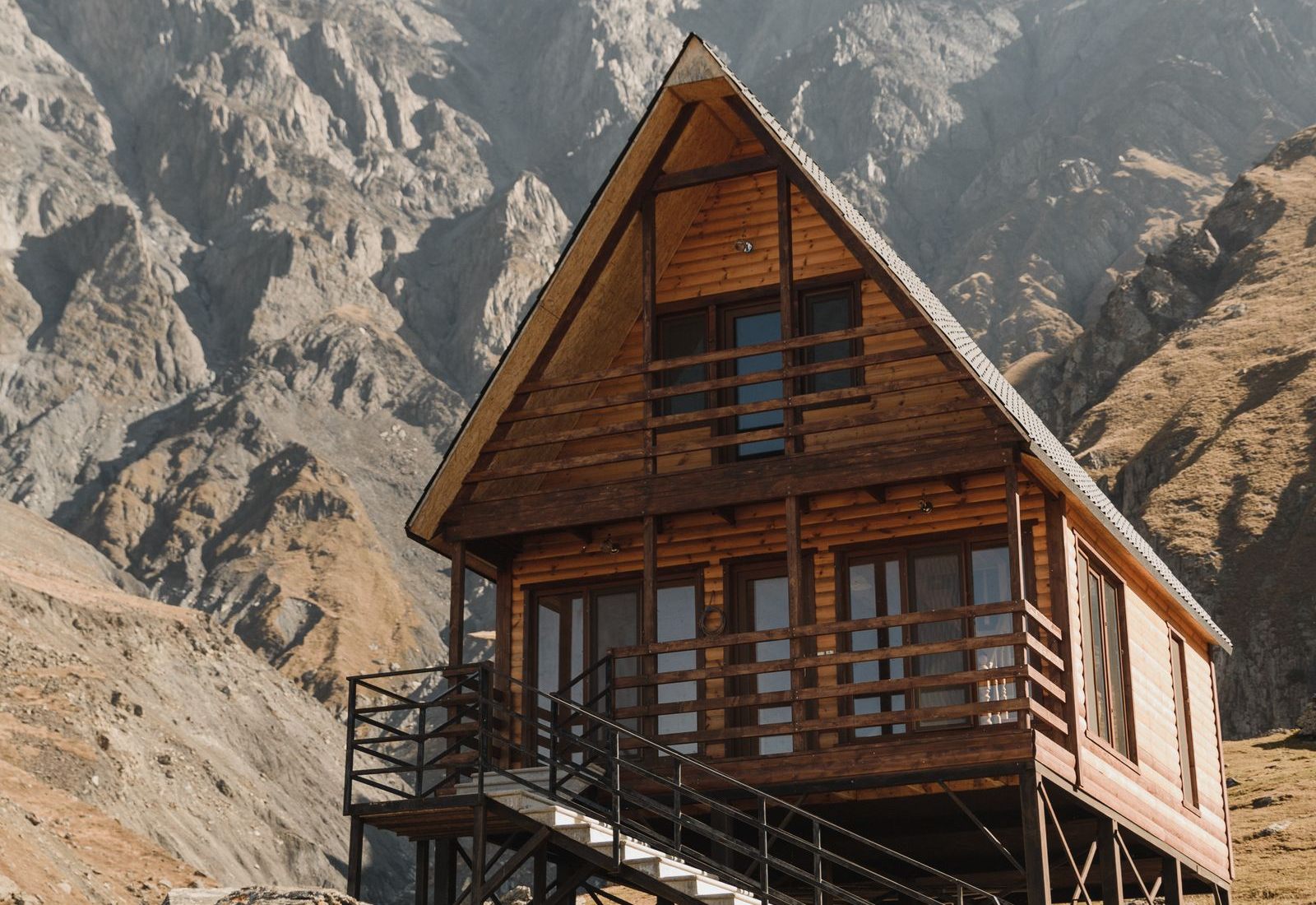
A hypothetical, labelled as one. A couple in their seventies owns a cabin outside Kamas, Summit County, bought in 1996 for $185,000. It appraises today at $1,100,000. Their total estate is about $4 million — far under $30 million.
- Gift the whole cabin over the next decade: the three children take a combined basis near $185,000 (plus any improvements). Sell it later for $1,100,000 and the gain is roughly $915,000. At the 15% federal long-term rate alone, that's about $137,000 of tax before Utah's income tax.
- Leave it to them at death: basis resets to the date-of-death value. Sell soon after for about that value and the gain is close to zero.
- Estate tax saved by gifting: none. A $4 million estate owes no federal estate tax, and Utah has no estate tax of its own.
Six figures of income tax paid to avoid an estate tax that was never coming. Only the fraction still owned at death steps up — so a program that's half finished costs half the step-up. The capital-gains rates, Utah's rate and the family's actual numbers are the CPA's to run. The direction of the trade isn't in doubt.
Under a $15 million exemption, the step-up is usually the bigger number.
The two-layer valuation
A fractional gift is valued in two steps, and they're two different disciplines.
Layer one: the whole property. A licensed appraiser values 100% of the property, fee simple, as of the gift date — interior inspection, comparable sales, condition, the same work as any estate or gift appraisal. For a cabin in Wasatch or Summit County that often means thin comparable data, seasonal access and a wider search for sales; the cabin and second-home post covers those problems. This is the layer Miner Appraisals provides.
Layer two: the slice. A buyer of a 5% undivided interest can't decide who uses the cabin which weekend, can't sell or refinance the whole property, can't remodel the kitchen, and can only get out by agreement with the other owners — or, failing agreement, through a slow and expensive legal process. Nobody pays 5% of the whole for that position. The reduction for lack of control and lack of marketability is a separate analysis, normally prepared by a credentialed business valuator or a fractional-interest specialist who works from the whole-property value. Miner Appraisals does not prepare discount studies, and a residential appraiser shouldn't be quoting one.
Two cautions about that second number. It is case-specific — the co-ownership agreement, the number of owners, the property type and the size of the slice all move it — so any "typical discount" quoted in a blog post or at a seminar is a sales line, not a valuation. And the IRS reads these closely. A discount sitting on a weak base number fails twice: once for the base, once for everything built on it.
The discount gets the attention. The whole-property value carries the weight.
What the annual-exclusion math looks like
Back to the Kamas cabin, and suppose the family proceeds anyway — say the kids want in and the parents want it settled. With gift-splitting, each child can receive $38,000 a year without touching the parents' exemption.
- Before any discount: $38,000 ÷ $1,100,000 ≈ 3.45% per child per year, about 10.4% across three children. Roughly ten years to move the cabin — longer if it appreciates.
- With a supported discount: each $38,000 buys a larger percentage, and the program shortens. How much larger depends entirely on the valuator's conclusion; no number is assumed here.
- Every round needs a value as of that round's date. Ten rounds, ten effective dates. Scheduling each year's deed in the same month keeps the appraisal cycle predictable, and a short update in a flat year costs less than a full report — but the cost is annual, and it's paid against a $114,000 gift, not a $1.1 million one.
A program built on the annual exclusion is a ten-year commitment to paperwork. Families that start one should price all ten years, not the first.
Form 709 and adequate disclosure
Gift-splitting generally requires a Form 709 even when every gift sits under the exclusion. A discounted gift is a second reason to file. The IRS's three-year window to assess more gift tax only starts if the gift is adequately disclosed, and Treas. Reg. § 301.6501(c)-1(f)(2)(iv) specifically calls for a description of "discounts, such as discounts for blockage, minority or fractional interests, and lack of marketability."
Paragraph (f)(3) lets the donor attach an appraisal instead of building the disclosure from scratch — but it has to show its work: the assumptions and limiting conditions, the specific basis for the value such as the comparable sales, and data detailed enough that another person can replicate the process. For a fractional gift, that means both layers attached, each one standing on its own. The Form 709 post covers the rest of the return, and the year-end gift checklist covers timing a deed before December 31.
Disclosed well, the gift closes in three years. Disclosed thinly, it stays open indefinitely.
What to have ready before the call
- The planned gift date — or, for a multi-year program, the month each deed will be delivered.
- The current deed and how title is held today.
- Any co-ownership or cabin agreement the family has drafted. The valuator needs it more than the appraiser does, but both should see it.
- The name of the attorney or CPA coordinating the plan, and whether a valuator is already engaged.
- Access details — seasonal roads, a gate code, who holds the key.
Five items. Most families have them in one drawer. The rest is scheduling.
Frequently asked
Related reading
Form 709 gift tax appraisals covers the return itself and the qualified-appraisal content. The step-up basis post covers what heirs receive at death, and GRATs, IDGTs and family LPs covers the trust-and-entity versions of the same idea. For cabins specifically, see cabin and second-home appraisals. Service pages: gift tax & charitable-gift appraisals and estate & date-of-death appraisals. Cabins in Summit, Wasatch and Morgan counties; rentals and primary homes across Salt Lake and Utah counties.
The exemption stopped forcing the decision. The basis math didn't — and every version of the plan still starts with one defensible number for the whole property.
Miner Appraisals is an independent, non-AMC residential appraisal practice in Utah — owner-operated by Dan Miner, Utah Certified Residential Appraiser (Lic. 10948175-CR00). Direct engagement only, signed reports, USPAP-compliant, one-to-four-unit residential. Gift & charitable, estate & date-of-death, and the rest of the full service catalog. Practicing since 2017.